Thursday, 16 December 2021

Burning the midnight oil with Access Easy English: Our experience at the Switzerland virtual Easy-to-Read Conference. Part 2.


Our team headed into Day 2 of the 2021 virtual KLAARA (Easy-to-Read) Conference feeling somewhat jet lagged by the time difference despite our feet staying firmly on Australian soil. The “jet-lag” was well worth it as we came away from the conference with fresh perspectives.


Day 2 talks explored:


·      The increased understanding of adults with ID when presented with concrete information rather than abstract.

·      The receptive language abilities of a group of primary school students with ID using the TROG-H test.

·      The problem of using negative sentences in Easy-to-Read.

·      Whether simplifying German text can inadvertently increase the complexity of the text.

·      Syntax of Easy-to-Read Polish using one idea per sentence and adjusting length of sentence to reduce complexity. What extent does this approach impact the understanding between simple and complex sentences?

·      The disconnect between experience of those who require Easy-to-Read content and those who don’t. How Easy-to-Read can lack the anticipated tact dealing with sensitive issues such as suicide.

·      The lack of Easy-to-Read sources on mental health in Australia for people with ID. Use of plain language can tick an accessibility box for organisation but not increase participation of those who have limited literacy.

·      The role of interlingual translation in providing Easy-to-Read resources for other languages where Easy-to-Read is not widely incorporated.

·      The issue of accessible websites assuming digital literacy.

·      Case studies on consumer testing and degree of supported mediation of the information.

·      Important components of Easy-to-Read and the role of knowing your reader.


Overall, the talks brought home the need to develop a more consistent and cohesive approach to accessible information. There is a need for society to begin to understand accessible text as a right, not a favour, and for accessible text to be backed with higher government and community expectations and standards. Not only for those with higher literacy at Plain Language level, the preferred accessible text approach by the Australian Government, but also those who require Easy English. 

 Look out for notices about the next conference in 2 years. Hopefully it will be face to face.

 Cass, Cathy and Rachel

Cathy Basterfield

Owner Access Easy English
Consultant – Speech Pathologist

Telephone: 0466 579 855

Email: cathy@accesseasyenglish.com.au
Website: 
https://accesseasyenglish.com.au/

 Facebook: https://www.facebook.com/accesseasyenglish

Blog: http://accesseasyenglish.blogspot.com.au
Twitter: @accesseasyengli

LinkedIn Cathy Basterfield

Friday, 10 December 2021

Content on the Disability Royal Commission in Easy English.

Where is it?

There is so much written content being created for the Disability Royal Commission. 

When we are doing many of our consumer reviews of Easy English on other topics, the many people we engage with with low literacy do not know about the Royal Commission. 

How is this possible? 

Look around you. Look at where content is published? Look at how it is being conveyed to the wide number of people with disabilities. People with disabilities have a wide range of different abilities.

Content is on their website and social media (I see some of their  posts on Twitter) . What other social media do you see the Royal Commission on? There is nothing on their website about their social media presence.  Very occasionally we hear about the Disability Royal Commission on some news services. Very very occasionally there are guests on interactive news and current affairs shows, like The Drum where it is discussed.

Where is the written content and information for people who prefer simple and clear written information?

How do you find it?

Is it fit for purpose?


Does it cover everything you need to know, that people with highly skilled literacy can read about?

I wrote a submission on their Draft Accessibility Strategy in August 2019. I did get a response, but nothing was changed because of the issues I raised. It is also not listed on the public list of documents. I can send you a copy, if you email me.

Last year, I wrote a second submission, this time on Emergency responses (Bush-fires) and COVID19 responses. In it I highlighted the huge issues for people with low literacy, and what our service provided pro-bono as no government service was doing this work. In late August 2020, we had over 120 separate pieces of information in fact sheets and posters on our website about COVID19 in Easy English. About 20 fact sheets and posters are still available here.  

Once again this submission has not been put on the public list of submissions. It has been handed to another department of the Royal Commission as a general submission. I can email you a copy of this also.

The Royal Commission are developing Easy Read. As with much of my investigations on the differences between Easy English and Easy Read, the Disability Royal Commission Easy Read is very complex and difficult to understand, even for people with good literacy. Read these 2 blogs from 2020 about the differences. 

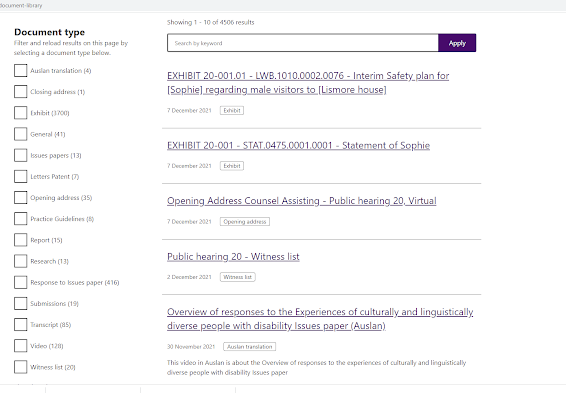
Firstly can you find the Easy Read on the website? They are never printed and distributed. This assumes high levels of digital inclusion and digital literacy to be able to access and locate them. Even if you go to the document library, you can not tick a box for Easy Read.

Print screen of your choice of document type.


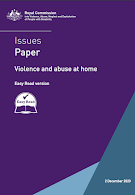
Here is the Issues paper in Easy Read on Violence and abuse at home.

Firstly, imagine you are a non reader. Do you have any idea what this book/paper/report is about? First impression are important. 

Will you bother picking it up? 


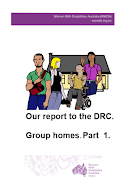
In comparison, here is the Easy English version on the 

As a non reader, do you have any idea what this book/paper/report may be about from the front cover? Will you consider opening it?

This has been developed in Easy English, which includes every day words of the intended reader, images that connect for that audience, clear and logical layout. It has also been consumer reviewed by a female identifying person with low literacy who has experience of group homes.

It would be great if the Disability Royal Commission actually commissioned the simplest type of written content for people to read. 

We welcome conversation about how to make this possible. 

Then more people with low literacy may be able to participate. the Disability Royal Commission will hear about more and different types of abuse, such as many people still do not know the Royal commission is currently running.

Cathy

Cathy Basterfield

Access Easy English

Telephone: 0466 579 855

Email: cathy@accesseasyenglish.com.au
Website: https://accesseasyenglish.com.au/

Facebook: https://www.facebook.com/accesseasyenglish

Blog: http://accesseasyenglish.blogspot.com.au
Twitter: @accesseasyengli

LinkedIn Cathy Basterfield


ASID Conference 2021 and Easy Read. Part 2

More on Deborah Chinn's presentation at ASID 2021. Read the previous blog for more information. 

Deborah referred to some agreed ideas such as 

- use of images

- positioning images to the left

- using easier language. 

Deborah's research from the UK pointed out the texts varied significantly and the target audience also varied. See our blog on Deborah's paper Developers perspectives.  In the UK, Easy Read is developed and presented as content for people with intellectual disability only. 

Note:Scandinavian countries focus more on the literacy needs of people who are not native speakers of the language. Many European countries also focus their Easy Read as being for people with intellectual disabilities. 

In contrast Easy English is targeted at anyone who needs content written in a simple and clear manner. We choose language and images based on the target audience of each document. 

Deborah advocated there is a need for more for research into the value of Easy Read for the target audiences.

This is an important point. There are many examples of Easy Read in Australia and they also vary widely in their design and readability, which is the same issue in the UK. This makes it hard for the reader to know what to expect of a document labelled Easy Read. These are some Australian Easy Read examples. Mental Health and 3rd interim report on the Disability Royal Commission

We know Easy Read is not as accessible as Easy English for more people with low literacy. We have consumer reviews of our documents and positive feedback from users of Easy English. However research of outcomes for consumers is welcome. These are some Easy English examples which have been consumer reviewed. NSW Ombudsman How to make a complaint  and the Women with Disabilities Australia Our report to the Disability Royal Commission. About group homes part 1 (scroll to the Safety from Violence section) 

It would be great to see some specific research that compares Easy Read and Easy English from the consumer perspective. It will important to measure not only the readability of documents but the outcomes for readers. This may provide clearer evidence and guidance for developing standards to produce simplified documents. It will be important to research this with different audiences – non English speakers, people with cognitive disabilities and those whose literacy skill do not allow them to access the information they want or need.

It also needs to be with naive readers of both Easy English and Easy Read.

Rachel Tozer 

Access Easy English

Telephone: 0466 579 855

Email: rachel@accesseasyenglish.com.au
Website: https://accesseasyenglish.com.au/

Facebook: https://www.facebook.com/accesseasyenglish

Blog: http://accesseasyenglish.blogspot.com.au
Twitter: @accesseasyengli

LinkedIn Cathy Basterfield


Thursday, 9 December 2021

ASID 2021 and Easy Read. Choice and power. Part 1

Day 2 of the ASID conference offered 2 presentations in the keynote session about Easy Read. 

First up Dr Deborah Chinn presented her findings and thoughts about Easy Read in the UK.

The presentation identified that some of the Easy Read documents reviewed in the health topics in the UK were very directive and often did not offer choice and power to the reader. This was identified as an issue and raised the question about the purpose of the Easy Read documents. Deborah observed that some documents may have been designed to make the experience easier for staff, rather than assist the reader to make decisions.

This is an important point. Human rights legislation upholds the right of people with disabilities to plan and make decisions about their own lives. There is an emphasis on supported decision making rather than substitute decision making (where others make a considered decision on behalf of another person).

I reflected on this point and our use of Easy English in Australia. Easy English (and Easy Read) can be used to give information, but can it also used to describe choices and options. 

Easy English can be designed for any type of document.

One obvious application is an Easy English version of a goal planning document. This should be all about choice – choose what you want to do, choose what help you want, choose who, when and where.

Contracts and agreements may offer choices of who to share information with, how a person would like to receive information. When we do consent for research in Easy English, it is important to include statements about

- why the research is being done

- where the information will go

- who gets to see your personal information 

- can you stop being part of the research. 

There are yes/no questions about each of these key statements. Is this providing choice and power to the reader? 

Look at these examples of Easy English to see how choice is included and described:


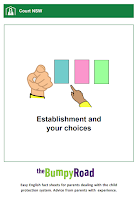
Establishment and your choices – this describes part of the court process in Child Protection. It offers and explains choices available to parents. 

(Note: Establishment is a Court word that had to be part of this title)


You are pregnant. What can you do? – a WWDA fact sheet. Explains all choices available to women who are pregnant.


Rachel Tozer 

Access Easy English

Telephone: 0466 579 855

Email: rachel@accesseasyenglish.com.au
Website: https://accesseasyenglish.com.au/

Facebook: https://www.facebook.com/accesseasyenglish

Blog: http://accesseasyenglish.blogspot.com.au
Twitter: @accesseasyengli

LinkedIn Cathy Basterfield
Easy English for a Virtual Conference 2021

Last month was the Australasian Society of Intellectual Disability (ASID) Conference. It was a virtual conference, like so many others have been in the last 18 months.

Being a virtual conference raises many issues regarding access to the digital platform for functional and meaningful engagement and learning opportunities.

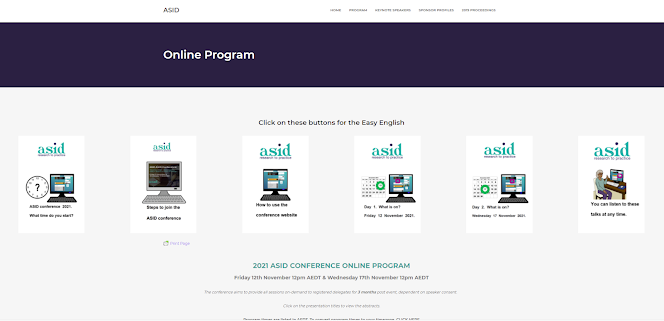
We were the Silver Access Sponsor at the ASID conference. We developed 6 fact sheets in Easy English. We have had some comments that we have included lots of detail in how to set up and how to find things on the conference website. Having low digital literacy does mean you are less likely to be included.  

View of the Easy English fact sheets on the website ready for people at the conference to use.


The fact sheets were

·         What time do we start?

·        Steps to join the ASID conference

·        How do I use the conference website

·        Day 1 program

·        Day 2 program

·        You can look at these at any time.

 It is worth considering the most recent data from the AustralianDigital Inclusion Index, which was released in October 2021 for Digital Literacy. It noted that those with high digital inclusion prior to the pandemic have increased their digital literacy skills. However, for those with low and poor digital literacy, their digital inclusion has stayed the same. So, over the last 18 months the gap between has increased. The 2021 data did not include Aboriginal and Torres Strait Islander people nor people from the Northern Territory.

Look back at the 2020 data also (Scroll down the page a little to find it) as it does include Aboriginal and Torres Strait Islander people and people from the Northern Territory. It notes

·        2.5 million people do not have access to the internet;

·        4 million people only access the internet via a mobile phone. It limits their access to data but also being able to read content on websites in a reasonable size font, and even be able to readily connect to a printer to have a printed copy.


Who else is likely to have low digital inclusion indices?

·        House hold income Q5 ($35K)

·        Aged 65 +

·        Less than secondary education

·        People with Disability

·        Household income Q4 ($60k)

·        Not in workforce

·        Indigenous Australians

·        Older people. 

Rachel and Lisa from the Bumpy Road project presented a paper at the  conference on developing Easy English content on NSW Child protection issues for an Easy to use website. We supported their work in developing 31 Easy English fact sheets and a simple set up and navigation of the website.  www.bumpyroad.org.au

There was also another paper at the conference which discussed the issues for people with low digital inclusion before the pandemic and what they needed support with to stay connected during the pandemic. See a later blog from Rachel.

Cathy Basterfield

Owner Access Easy English
Consultant – Speech Pathologist

Telephone: 0466 579 855


Email: cathy@accesseasyenglish.com.au
Website: https://accesseasyenglish.com.au/


Facebook: https://www.facebook.com/accesseasyenglish
Blog: http://accesseasyenglish.blogspot.com.au
Twitter: @accesseasyengli

LinkedIn Cathy Basterfield

Wednesday, 8 December 2021

Competing factors in Easy Read: producer perspectives.


Deborah Chinn's paper, "Talking to producers of Easy Read health information for people with intellectual disability: Production practices, textual features, and imagined audiences," (2019) was recognised with an Australasian Study of Intellectual Disability award at the 2020 AGM. The paper discusses the development of accessible information from the creators point of view by looking at

·      what influences the priorities of those creating Easy Read health information;

·      how the creators saw the Easy Read health information being used in real-world settings;

·      the role Easy Read Health Information plays in providing people with Intellectual Disability with accurate medical information;

·      how people with Intellectual Disability see Easy Read health information.

Being from the UK, the paper is specifically discussing Easy Read only. You can read more about on the similarities and differences with Easy English here. Chinn specifically investigates Easy Read in the context of health information and the study also looks at how the medical staff and others used the Easy Read materials.

 The paper touches on the lack of standard practice in the creation of Easy Read and how it can mean a lack of consistency from different creators. This means that end users may benefit from the content produced by one creator but not another. 

Chinn also considers how health staff may influence the outcomes for the end user by their engagement with this health information. For example, health staff may not want to provide the end user with options they do not consider to be in the patient’s best interest. The paper raises the need to remedy biases concerning public institutions by enabling the independent participation of those with low English literacy within these institutions  This highlights the need to ensure Easy Read health information supports the independent participation and decision making of people with Intellectual Disability.

Chinn recognises need for collaboration between the creators and the end-users. People with Intellectual Disability have diverse ranges of capabilities and needs and they cannot be treated as a homogenous audience. However, the detached 'on demand' nature of commissioned Easy Read content magnifies the risk of presumption relating to the end-user.

 Creators share the concern that a lack of collaboration can push the creator to produce for imagined audiences rather than the real-world end user. This limits the ability of the accessible communication to reach those whose needs do not conform.

 The research shows that while progress is being made, there is still work to be done.

 What do you think?

Do you see the same issues with Easy English?

Are we providing only positive options?

What competing needs have you found to be involved in Easy English?

Do you think there is a difference when creators work with different people who are the intended readers?

We would love to know your thoughts.

Cass


Bibliography

Chinn, D. 2019. "Talking to producers of Easy Read health information for people with intellectual disability: Production practices, textual features, and imagined audiences." Journal of Intellectual & Developmental Disability 44 (4): 410-420. 

        https://doi.org/10.3109/13668250.2019.1577640.

Tuesday, 30 November 2021

Burning the midnight oil with Access Easy English: Our experience at the Switzerland virtual Easy-to-Read Conference.

 Our team attended the 2021 virtual KLAARA(Easy to Read) Conference in late August. It’s not quite the same as having lots of conversations face to face from around the world. Evenso, we heard lots, chatted with some, and shared our Australian perspective.

 Day (Night) 1.

The keynote speakers included: Deborah Chinn, Saskia Schuppener, Anne Goldbach, Tatjana Knapp and Walburga Fröhlich.

 Deborah Chinn spoke about the linguistic features that can adjust the readability of texts and discussed research findings from both her work and that of others. The research drew on various disciplines to understand the social and interactional aspects involved in Easy Read.

 Saskia Schuppener and Anne Goldbach discussed the normalisation and acceptance of Easy-to-Read in public spaces in Germany.

Tatjana Knapp explored the research and development of Easy-to-Read in Eastern Europe. She looked at the similarities and differences in the development in six countries in Eastern Europe since the late 1980s and discussed the current situation and challenges facing Easy-to-Read. Knapp also explored how research from around the globe could be mutually beneficial to the development and use of Easy-to-Read.

 Walburga Fröhlich looked at the role digitisation can play in improving the quality of Easy Language and explored both the benefits and barriers of digitisation.


Cathy presented 2 talks. Her first talk discussed her current language analysis between various forms of accessible content. Looking at Easy English, Easy Read and Easy-to-read, Cathy presented a review of national and international perspectives on developing content that is accessible and the need to develop an evidence-based practice for accessible communication for those with a diverse range of literacy needs.


Change meaning by adding or changing an element 

Cathy’s second talk discussed the role of images in accessible communication and the importance of how images are used, and the importance of the text being very simple to identify simple yet meaningful images. There were lots of practical hints on how to make an image more meaningful. Some of this was based on the consistencies in images used on Communication Boards, like use of arrows for direction. It was one of only 2 talks on images at the conference.


Concrete and abstract image of choose


Clearly conversations on images need to be built on further. The second paper on images was on whether easy to read can use Artificial Intelligence to create meaningful images in our work. The reasoning behind this investigation was that finding useful and clear images for our work is very time intensive. Can AI shorten this part of the development?  The upshot – nope. Well not yet anyway. To modify a 3 dimensional image to a 2 dimensional pixelated image did not result in a simple clear image. 

 Lots of presentation used a new term ‘Easy Language’ – more about this later.

 Day 1 was thought-provoking as presenters raised questions about the real-world impact of accessible information. Issues like

  • Does Easy Read provide actual choices, both positive and negative options, for the end-user?
  • What role can Easy Language play in the development of curriculum for Special Educators?
  • How does accessible communication help address asymmetrical conversations and positions of power?
  • How does accessible information play increase the participation of people with ID in public life?
  • What is the role of easy language in translations?
  • Can accessible communication be both direct and polite?
  • What cultural considerations need to be taken?
  • When addressing matters of trauma, how do we find the balance between bluntness Vs. education and knowledge?
  • How can we negotiate expectations of complexity for appearance's sake?
  • Is the message lost in translation to easy read?

 The highlight of the conference was the much-needed discussion around whether the existing accessible information is improving the engagement and participation of people with ID and/or low literacy. Seeing at least some discussion of consumers of accessible information in some studies was good to hear. 

 The type of consumers many were engaging with appeared to have relatively high literacy or were learning the language as a second language. Once again, missing most of the cohort we advocate for.

 It was encouraging (or is that a challenge thrown out to Australia?) to see the incorporation of accessible information built into government policy in many European countries.

 Cass, Cathy and Rachel

Cathy Basterfield
Owner Access Easy English
Consultant – Speech Pathologist
Telephone: 0466 579 855